
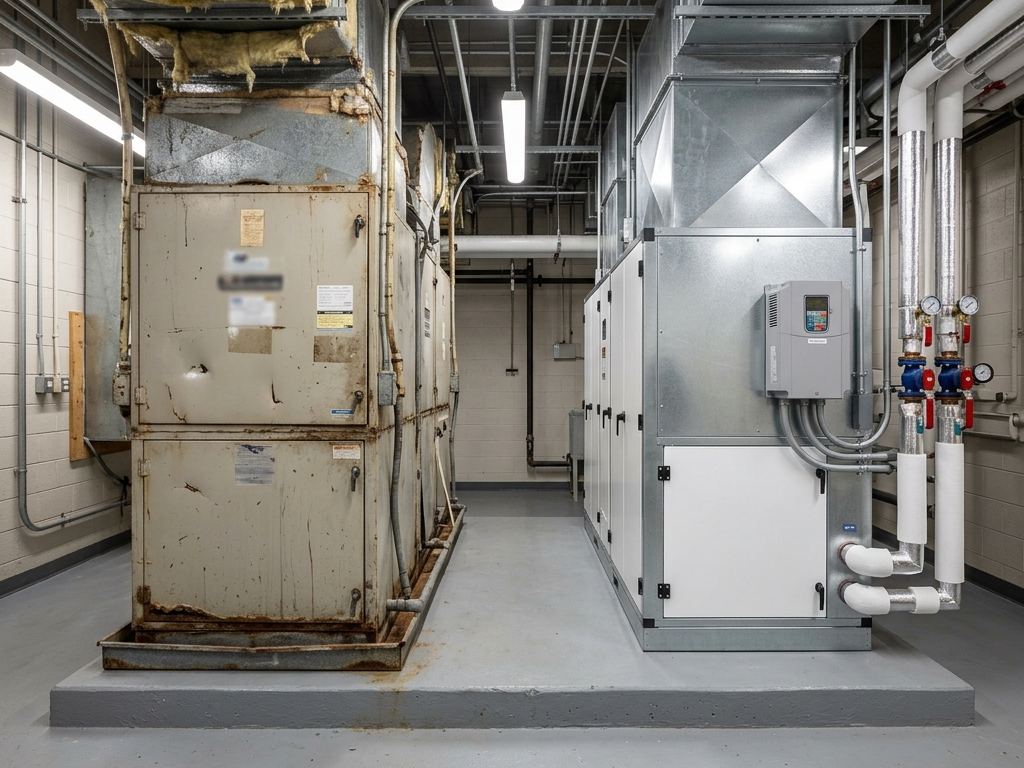
What replacing in kind means
Replacing in kind means swapping old equipment for new equipment of the same size and type. It is fast to design, easy to approve, and usually the lowest first cost. It also assumes the original sizing was right, and that the building still uses energy the way it did when that equipment went in.
Why that assumption usually fails
Hospitals change constantly. Departments move, clinical spaces get added, equipment loads grow, envelopes get upgraded, and codes change what the air has to do. A plant sized for a building in 1976 is sized for a building that no longer exists. Replace it in kind and you lock in a mismatch for another thirty years.
The mismatch runs both ways. Undersized equipment cannot hold conditions in the spaces that matter. Oversized equipment spends most of its life at part load, short cycling and wasting energy.
What we do instead
We start with load calculations for the building as it is today, then size the system from those numbers rather than from the nameplate on the old unit.
At the Asheville VA, that meant sizing roughly 10,000 feet of chilled water distribution piping from load calculations and HVAC modeling instead of matching what was already in the ceiling. Right sizing the distribution improves capacity and efficiency at the same time.
At Brockton, the mental health ward renovation replaced two undersized air handlers with four. That is what finally gave the patient spaces real heating and cooling control, which a one for one replacement would never have delivered.
The cost argument
Sizing from load calculations takes more design effort up front, and sometimes the right answer costs more on day one. But the equipment runs for decades, and almost all of its lifetime cost is energy and maintenance, not purchase price. The design hours are the cheapest part of the decision.
The takeaway
Replacing in kind is quick. Sizing it right is what you live with. Before you buy the same unit again, find out what the building actually needs now.