What got built
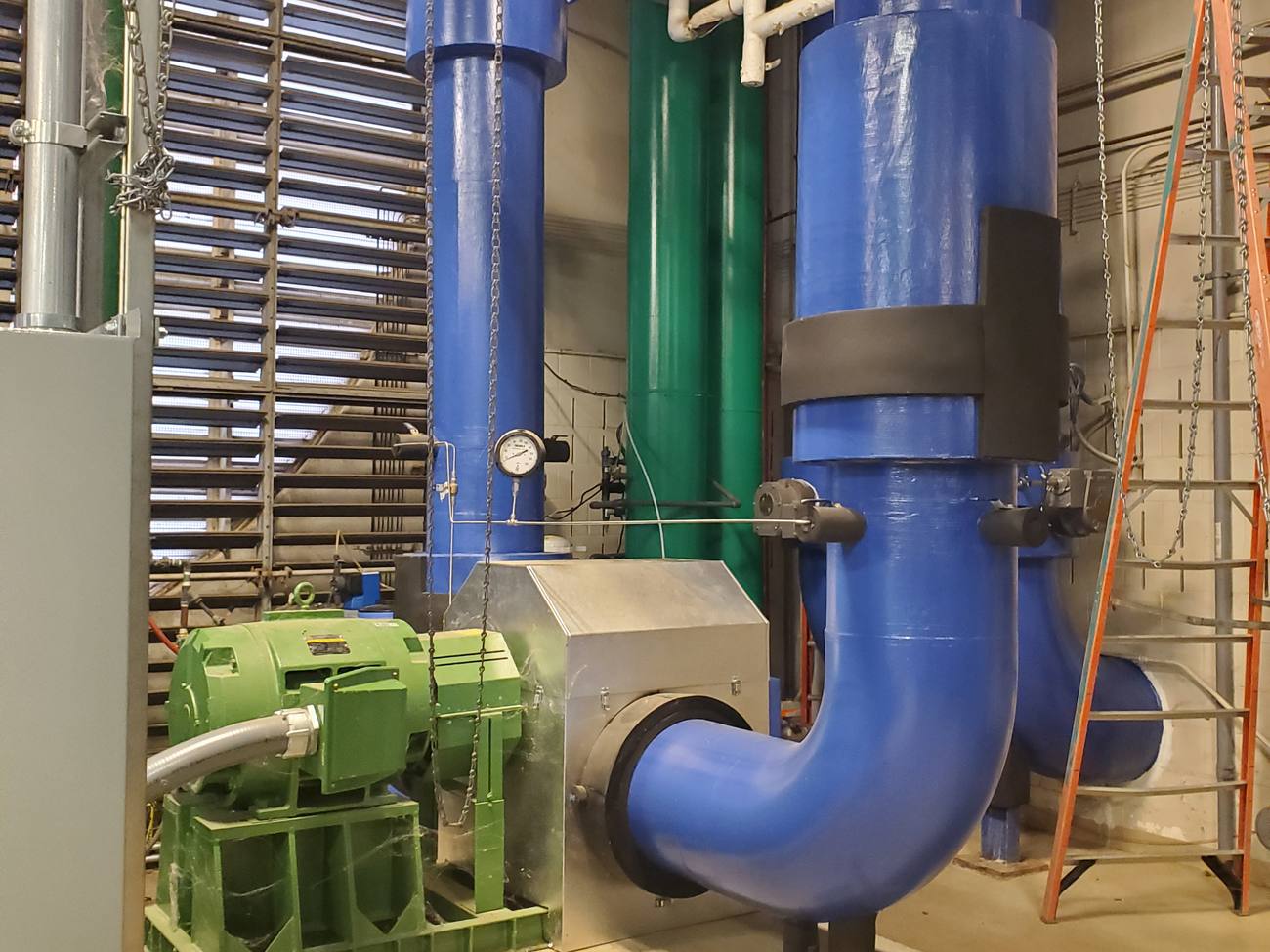
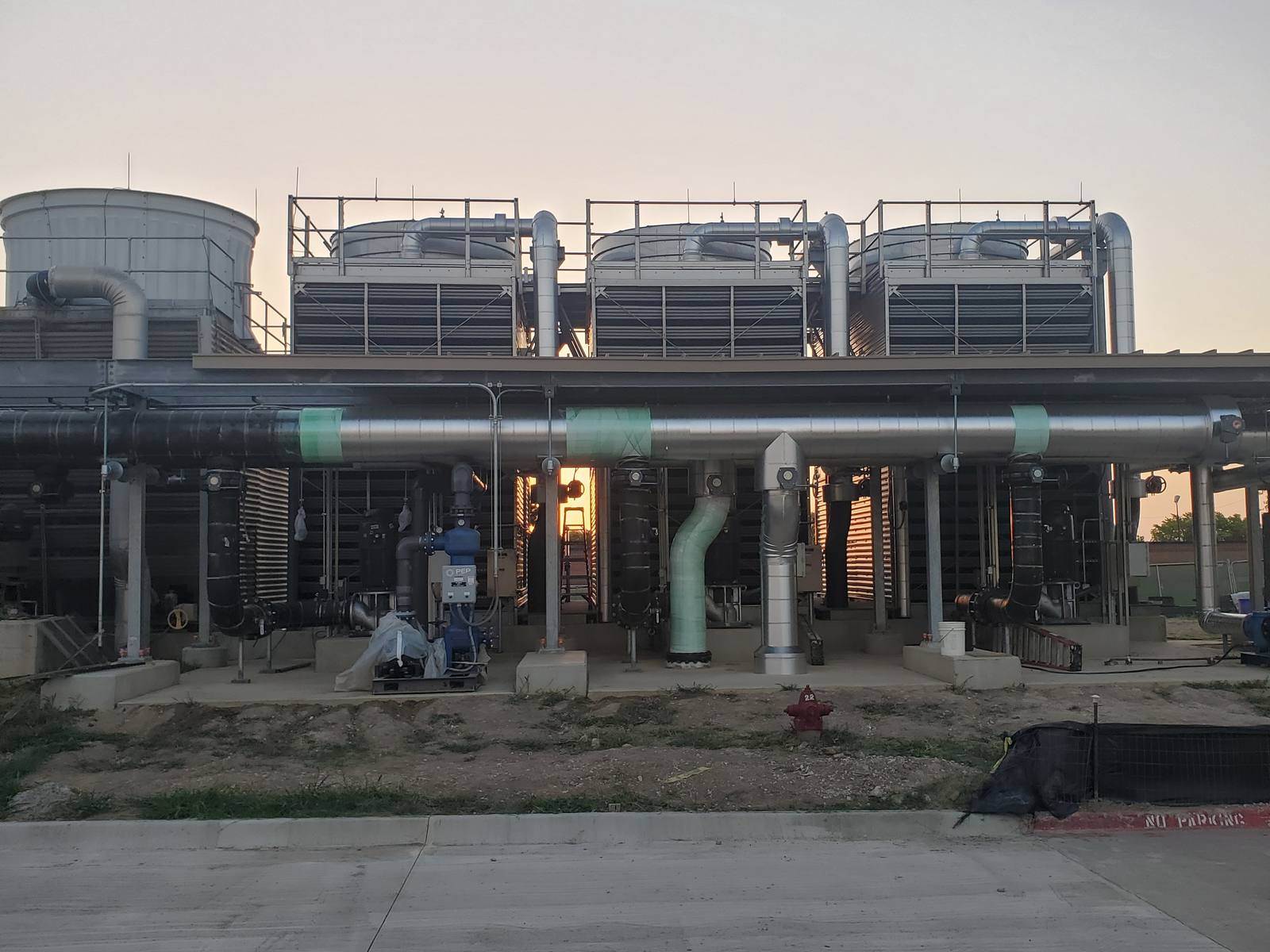
The scope centered on Building 70: a new 1,500 ton chiller with its associated equipment and piping, and a complete replacement of the cooling towers serving it. Four existing field erected towers came out. Six new pre-packaged stainless steel cooling towers went in, set on the existing concrete basins with extensions where the new footprint required them.
Between the cells the work added sluice gates so the basins connect to one another, and each new cell got a basin sweeper with a centrifugal separator to keep debris out of the water. Add the pumps and piping in and around the building, and it is a substantial amount of new equipment brought online at once on a campus that cannot lose cooling.
What commissioning actually did
Our scope was verification, and it broke into five plain objectives.
The controls match the drawings
We verified the controls were installed according to the contract drawings, the manufacturer's recommended practices, and accepted industry standards. Controls are where a new plant most often departs from its design, because the wiring gets finished under schedule pressure and nobody goes back to compare it against the sequence that was specified.
Every piece got a real startup
We verified that the equipment and components received an adequate operational checkout, start-up and test by the installing contractors and suppliers. Not a signature on a form. An actual documented startup on each piece.
The controls perform, not just exist
Installed correctly and performing correctly are different claims. We verified and documented the proper performance of the controls under operating conditions, which is the only way to know a sequence does what it was written to do.
The systems talk to each other
Six tower cells, a new chiller, sweepers, separators, pumps and the campus systems they tie into all have to behave as one plant. We verified and documented that the systems were integrated rather than merely coexisting.
Issues get closed, not just noted
Where we found non-compliant work, we brought it to the owner's attention and then tracked it through to resolution. A commissioning report full of open items helps nobody, so the tracking is as much of the job as the finding.
Why an owner should care
A brand new plant can still run wrong on day one. Wrong sequence, wrong setpoint, a control loop wired backwards, equipment that was never properly started. None of that shows up in a walkthrough, and all of it shows up later as high energy bills, short equipment life, or a hot building on the first real summer day.
Commissioning is how the owner finds out before the hospital does, and while somebody else is still responsible for correcting it. After closeout, the same fix is a change order.